Tarot Cards
psychedelic poster art
September 2025
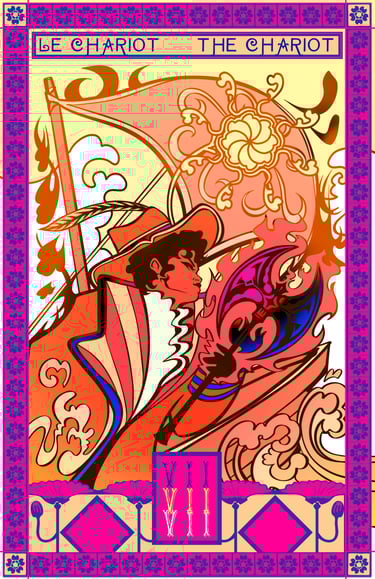
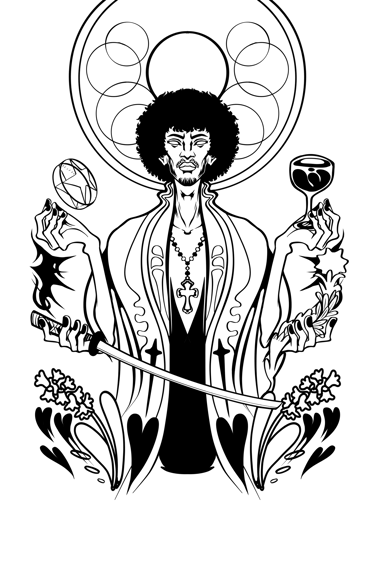
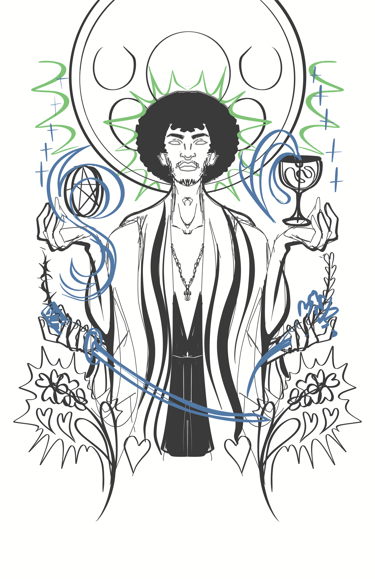
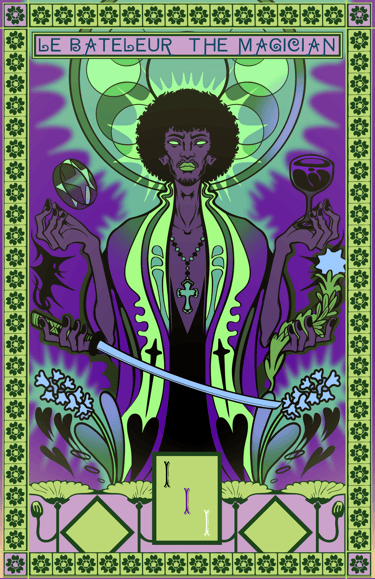
This is a series of three large-format posters presenting characters from Jackrabbit+Cherrybomb as tarot archetypes; The Magician, The Moon, and The Chariot. Each poster takes the traditional iconography of its card and rebuilds it around a specific character, using the card's established visual symbolism as a framework to explore who that character is and what they carry.
As standalone pieces, these are rich, maximalist posters in the psychedelic art-nouveau revival style of 1970s poster art a la David Edward Byrd with the bright, bombastic color palettes and dense floral symbolism. No familiarity with the comic is required to appreciate them. But for readers who know the characters, the card assignments run deep: tarot imagery is layered with intentional meaning, and every visual choice is doing double duty as both iconographic tradition and character study.
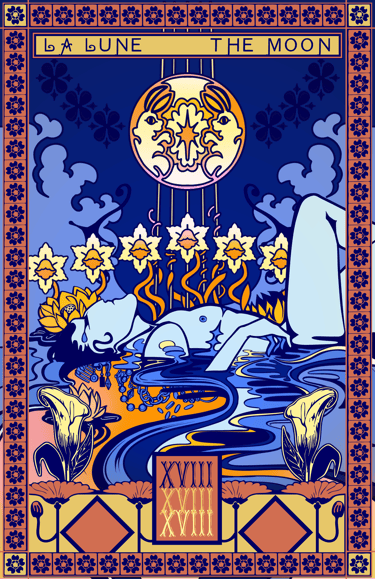
The Moon is a card of duality, illusion, and hidden depths; and Jack is a character defined by that manner of tension. He's depicted suspended in a still reflecting pool, surrounded by lilies, wreathed in jewelry and the visible weight of accumulated wealth, sinking slowly into the glossy blue water. The mood reads immediately as melancholy in the midst of luxury, while the visual reference to John Everett Millais' famous portrait of Ophelia heightens the implicit drama of this subject and his circumstances.
The style here is a natural extension of the 1970s visual world Jackrabbit+Cherrybomb already inhabits, the same era, the same philosophy that illustration should be lush and deliberate and a little overwhelming. Tarot as a format demands that kind of density of symbol, which made this a compelling design challenge.
It was also important to me that imagery contained within the cards still be readable at palm-size, as they would be if used practically in a tarot deck, while still incorporating a dearth of detail which is more legible when viewed at poster-size, resulting in two printed experiences, both of which were accounted for when planning the final artwork.